







 Watch Full Show

Related
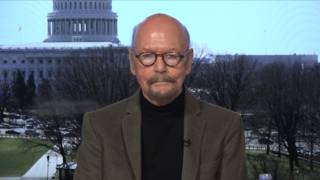
Cornel West, the renowned professor of religion and African American studies at Princeton University, joins us to give his assessment of the Democratic presidential field. [includes rush transcript]
Related Story
 StoryAug 02, 2017Explosive Lawsuit: White House & Fox Peddled Seth Rich Conspiracies to Distract from Russia Probe
Transcript
AMY GOODMAN: As we continue our look at the Democratic presidential candidates, we turn to Cornel West, professor of religion and African American studies at Princeton University, author of many books, his latest Democracy Matters: Winning the Fight Against Imperialism. I spoke with Professor West before the broadcast and asked him about his thoughts on the presidential race.
CORNEL WEST: I think that we’re beginning to move to some of the serious subject matters, but we’ve still got a long way to go, though, Amy. You know and I know that the fundamental question is always, what is the quality of service to everyday people, what the depth of love and sacrifice to empowering everyday people.
When you look at what, in fact, Obama, Edwards, Clinton — let’s say the top three, as it were — there’s no doubt that Edwards has an impressive concern about poverty and so forth. And Brother Obama — and you know I am a critical supporter of my dear Brother Obama — I think that his campaign is kicking in, but it’s still got to be more intensified when it comes to focusing on issues that concern progressives. And I think Hillary Clinton has a long way to go, because she’s carrying a baggage, as it were, of the kind of neoliberalist — the neoliberal project of her husband.
But I think that we’re going to — beginning tonight, we’re going to see a turn. We’re going to see a real focus on the criminal justice system, prison-industrial complex; wealth inequality; imperial invasion, not just in Iraq, but threatening Iran, and so forth and so on. And I’m hoping, of course, that my dear Brother Obama really emerges, and I’m hoping and praying that he does. But most importantly, you and I know it’s really about causes, it’s really about principles, it’s about ideals, and we’re fighting for democracy now, as you rightly describe and name your wonderful show, my sister.
AMY GOODMAN: When you say, Professor West, a critical supporter of Obama, what do you mean? Where do you think he hasn’t come out strong enough?
CORNEL WEST: Well, I’m in his camp, but I’m just — I put pressure — I think that he’s got to be more bold. I think that he’s got to be more courageous, in terms of highlighting issues of the poor, issues of working people, the legacies of white supremacy that are still very, very real. And I know he’s got to be a politician about this, on the one hand, because he’s got a larger constituency, but you know and I know we’re looking for statesmen. And I think my dear Brother Obama has a potential to be a great statesman, but he’s in process. And we’re putting — we’re pushing and hoping that he enacts this kind of statesmanship, which has to do so much with bold unflinching honesty and candor regarding the levels of injustice in our society.
AMY GOODMAN: And when you talk about Hillary Clinton, referring to her neoliberal background and agenda, what do you mean by that?
CORNEL WEST: I mean that neoliberalism is spent, you know? It was opportunistic. It looked good on the surface, but it had very little substance when it came to poor people, when it came to working people, when it came to the crime bills that have generated, escalating incarceration of so many poor people, and so forth. She’s either going to have to shift in a progressive way, or the old neoliberalism, I think, is going to run out of gas.
AMY GOODMAN: Edwards?
CORNEL WEST: Edwards is — you know, he’s an impressive brother. He’s not getting the traction that he wants, I think, but the issues of poverty and universal healthcare, I’m impressed. I’m hoping my dear Brother Obama actually begins to out-progressivize Edwards, as it were. But I have great respect for Brother Edwards and his wife, of course, who we all want to pull for and myself, as a Christian, I pray for.
AMY GOODMAN: Princeton University professor and author Cornel West on this morning before the Democratic presidential forum that will take place at Howard University.



 Top
Top
Media Options